
It might seem like a complicated ordeal to install smart home devices. However, the latest smart devices come with
simple instructions and user-friendly controls. The best way to get your smart lighting, smart speakers, smart
thermostats and other devices up and running is to focus on quality internet connection and a central hub.
Get the best internet you can find
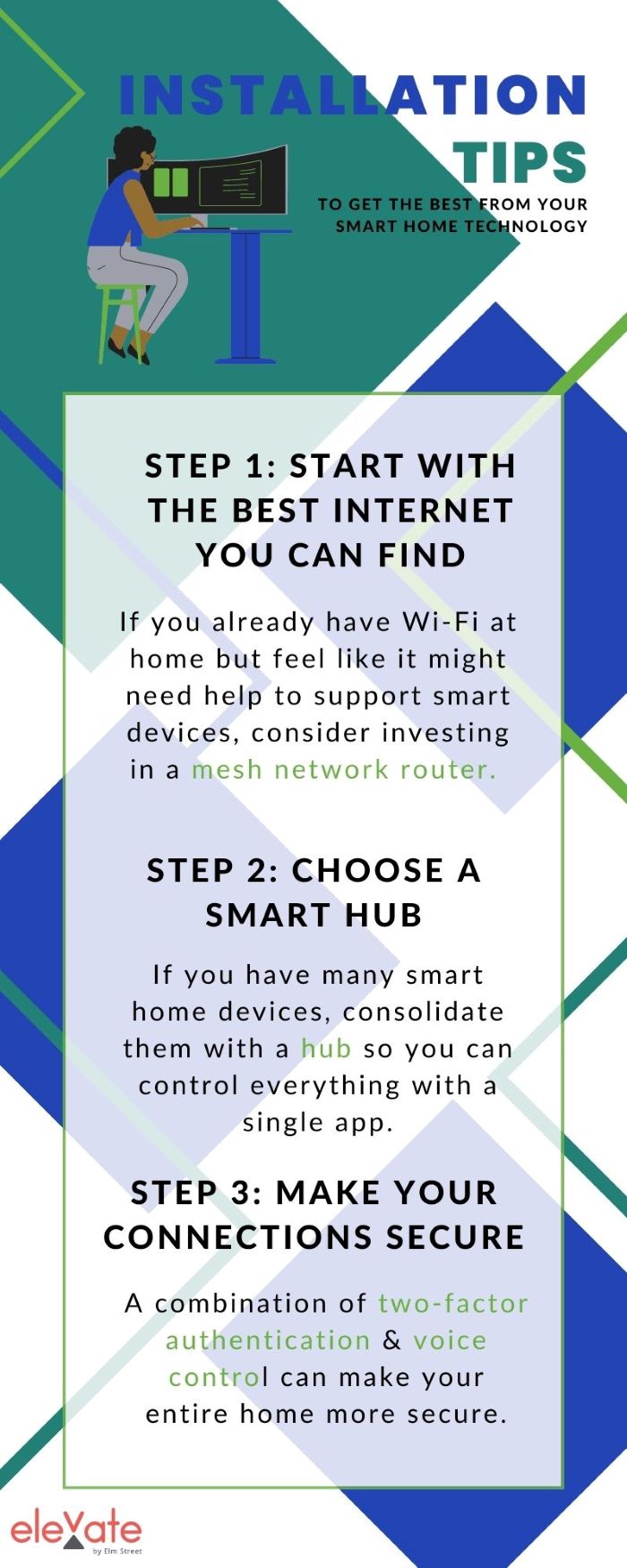
You need reliable internet service for installation and ongoing function of your smart home setup. If you already
have Wi-Fi at home but feel like it might need help to support smart devices, consider investing in a mesh network
router. Mesh networks eliminate “dead zones” in your house and ensure a strong signal in every room.
Pick a smart hub
Smart home hubs allow you to control all connected devices from a central location and app. If you have many smart
home devices, it’s a good idea to consolidate into a hub. Having a hub for your smart home system awards you
conveniences like using voice commands for multiple devices at once.
Connecting to a hub via your mobile device will let you take the entire smart system with you when you leave the
house. This can be incredibly useful combined with smart home security cameras, smart locks, smart smoke detectors
and more.
Make your connections secure
Most smart home device manufacturers include security options in their basic functionality. However, keeping your
home network secure remains crucial. Consider establishing a guest Wi-Fi network with limited permissions. A
combination of two-factor authentication and voice control can significantly reduce risk of unauthorized access.
Smart lights and other smart home devices can make life easier and your everyday tasks more efficient. While most can
be installed on your own, don’t hesitate to reach out to your local home tech experts for assistance.